
Reasons for Acne
Acne thrives and lives in our skin when the environment for sebum development is optimal. The occurrence of acne is prevalent in teenagers and women, it may continue to adulthood, however there are no solid answer for the cause of acne but there are many forms of treatment that are effective if in treating acne. Furthermore, acne comes in different severity and any form can cause one to become self conscious of their acne, especially if left untreated, it could escalate to cyst development, acne scarring and skin discolouration/pigmentation.
There are 3 layers to the human skin – the epidermis, dermis, subcutis/hypodermis. Majority of human skin obtains oil glands called sebaceous glands that are connected to pores that are located at the base of hair follicles, which is at the deepest layer of the skin called subcutis/hypodermis.
These hair follicles could potentially become blocked through accumulation of excess oil produced by the sebaceous gland. Hair follicle blockage could also be due to higher rates of skin cell turnover, which allows for higher accumulation of dead skin cells. Naturally, the sebaceous gland secretes oil called sebum. At moderate levels, it could be beneficial to the skin as it acts as lubricating agent for the skin and hair, which acts as protection and a moisturizer.

Nevertheless, when hair follicles produce excessive oil/sebum, dead skin cells and bacteria creates an environment in the subcutis layer of the skin that promotes the growth of bacteria (P. acnes) as the hair follicle continues to collect dead cells and more sebum.If the termination of bacteriagrowth does not occur or inadequateelimination the P. Acnes bacteria and dead cellsoccurs,the immune system responds through inflammation of the area and thus results in red spots, known as pimples/acne, appear on the skin.
Environmental and Genetic Contributing Factors to Acne
We know that over-production and excretion of sebum leads to the formation of acne. However, there are many contributing factors that off-set the homeostasis in our body that leads to the over-production of sebum, such as:
- Genes Similar to other biological disease or disorders, they all have a genetic component to it. It depends on which genes you inherited and gene expression. The major gene that is believed to be involved in acne formation as MMP-1.
- Fluctuation in hormones This can potentially explain why teenagers andsteroid-abuse in body trainers are more prone to acne. The secretion of sebum relies on the activation of the sebaceous gland. The main hormone linked to this biological mechanism is androgens. Individuals who are unable to adequately convert testosterone or possess elevated levels of testosterone in plasma or free testosterone are more prone to acne formation. The off-set of androgens levels could trigger over stimulation of the sebaceous gland, which causes the excess secretion of sebum. Furthermore, the off-set of hormones levels could also have an effect on the binding agents associated with androgens and thus effect androgen levels indirectly.
- Increase in stress Excessive amount of stress wears down biological resources and decrease optimal functioning within many aspects of the body. Increase in stress causes over-production o corticotrophin-releasing hormone and sebocytes, which are responsible for the regulation of sebaceous lipid production. Sebum is oil, which is classified as a lipid. If lipid regulation is effected, over-production of sebum will occur and lead to acne formation.
- Diet, Life-style& Habits Acne is correlated to high sugar diets however, this does not apply to everyone since everyone’s gene component is different thus their interaction to environment will not the same. However, it was found that westernized culture food induced more inflammatory reaction in the skin. Life-styles that hinder the amount of sleep one receives, engaging in activities that that require wearing tight clothes/helmet and promotes excessive sweating. Additionally, exposure to environmental pollutants, bad eating habits, drug-abuse and excessive alcohol can also contribute to unhealthy acne-prone skin.
Forms of Acne Treatment
1. Laser
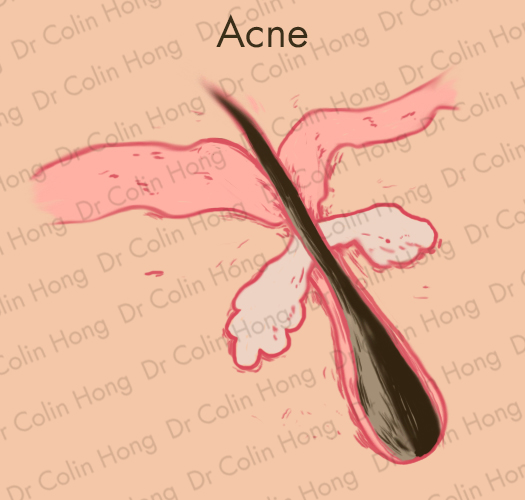
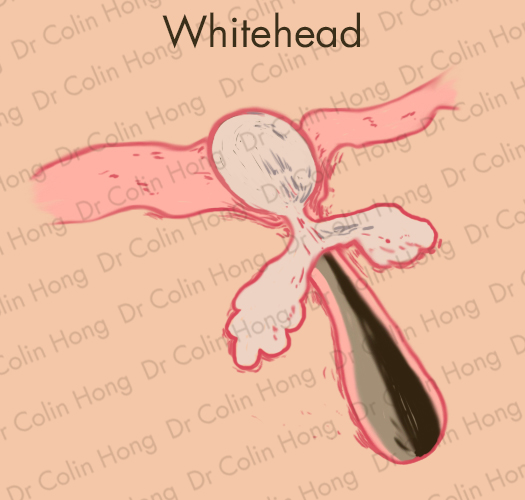
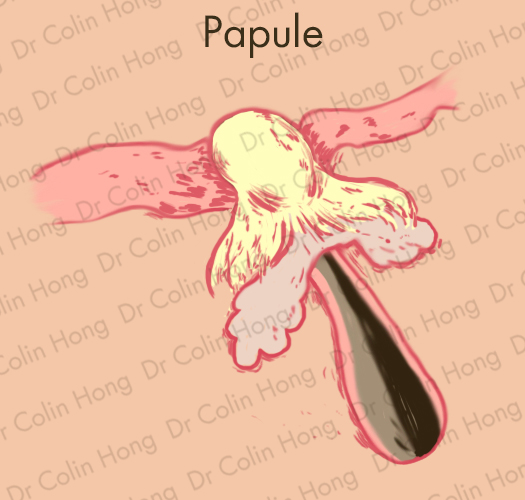
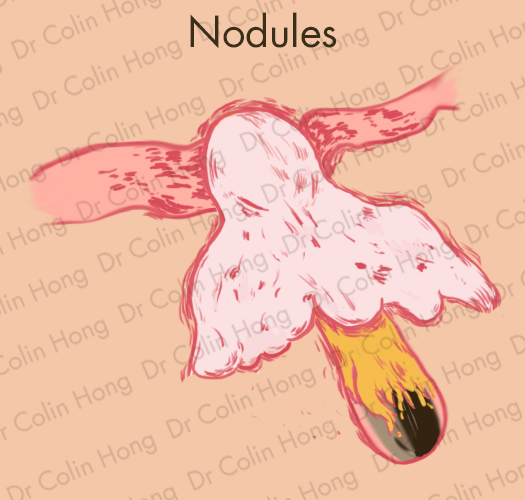
Majority of laser acne treatments focus the sources of acne production by removing/modifying the P.acne, oil glands or sebum. 2 The enlargements of oils glands could be connected to the idea of why acne occurs since larger oil glands produces more oil. Puberty, stress, hormones, diet, lifestyle, etc. are several reasons why the enlargement of glands occurs. Acne is not only common found on the surface of the face but also found on the neck, shoulders and back. Pimples also appear as: blackheads, whiteheads, papules, pustules, nobules and cysts. Acne have different levels of severity (mild, moderate, inflammatory) which all requires special forms of treatment. Determining the form of acne you may have is a step closer in being able to effectively treat it


Types of Laser Removal for Acne
Laser removal for acne is not limited to only acne itself but is also efficient in removing scarring and redness caused by acne. The type of treatments that are available differentiate by the chemicals and machinery used. The types of treatments offer also differ by the forms and stages of acne it treats.
- Diode Laser Therapy (Smoothbeam) is growing popular among treatment for more severe acne, inflammatory acne.The diode lasers work by targeting sebaceous gland, which serves to lubricate the skin by secreting the oily/waxy substance, sebum. The laser damages these glands in attempts to terminate the secretion of sebum and reduce the symptoms of acne. It also stimulates the production of collagen that is responsible for improving the appearance of your skin.Diode lasers use LED that produces a wavelength around 1450 nm. As the length of the wavelength increases, penetration of the cutaneous tissue is accomplished and light is reached into the sebaceous glands to be absorbed. As more light is absorbed, heat is produced which affects the structure and function of the sebaceous glands, thus decreasing its size and activity. The cost ranges from $250 per. Treatment.
- Radio Frequency Laser (Accent Laser) is another effective treatment used to treat inflammatory acne. What it does: It emits high frequency beams of radio waves that heats sub-cutaneous tissue to damage acne bacteria or size/activity of sebaceous glands (which decrease sebum secretion). The machine emits a radio wave frequency of approximately 5 MHz, which produces heat causing the temperature of internal skin tissue to increase. The outer surface of skin tissue is sprayed with cold gas for it to cool down so that it does not reach to the same temperature as the internal tissue. The heat around this area causes inflammation to decrease, kills off acne bacteria and minimizes sebaceous gland activity/size.
- Photopneumatic Therapy (Theravant Clear) is usually used as treatment for mild acne to inflammatory acne, pustular acne, comedonal acne and redness. It uses a combination of light and vacuum to clear the pores of the skin through heating the dermis and removing the sebum. The device is placed onto the targeted area and vacuums the build-up of sebum. During this process, light is also used, which activates porphyrnes that destroys acne and decrease the secretion of sebum. The cost is around $250 per. Treatment.
- Laser Resurfacing (YAG Laser) Most preferred in treating severe acne, mild acne scars caused by infection and excess pigmentation (melasma). The YAG laser acts as peel by targeting the surface layer of the skin. It is less intrusive to the skin than other skin removing treatments since it only targets the artificial layer part of the skin. It also permits resurfacing of new skin. The YAG laser uses an aluminium garnet that produces an infrared wavelength (around 2940 nm). The treatment consists of turning the water on the surface of the skin into vapor. This able to be accomplished by the infra-red light since it is strong enough to be capable of absorbing water. Approximately 1/100 mm of skin tissue is removed during this process. The cost ranges $200-$700 per. treatment.
- CO2 Laser resurfacing Is the latest versions of laser resurfacing that help treats severe acne and acne scar. A pulsating laser acts as peel that targets the surface layer of the skin by using heat. The CO2 laser produces a long wavelength that penetrates deep into skin tissue. A local anesthetic is applied prior to treatment. The carbon dioxide laser produces pulsating infrared wavelengths directed on the infected area. This produces heat that increases the rate of the repairing skin cells and collagen production. The cost ranges from $500-2500 for a full face.
- Blue Light Therapy Used for treating mild-moderate acne. The blue light targets the molecules porphyrins, which are produced by the bacteria, P. acne. It eliminates P. acne thus prohibiting the production of sebum and inflammation. Prior to exposure to the blue light, an agent is applied onto the skin that helps induces more light absorbent in the skin. A blue light is then emitted at approximately 405-420 nm on the patient’s face. When the wavelengths of the blue light hit the porphyrin, the light kills the bacteria. It also affects the sebaceous gland thus reducing the secretion of oil. The cost is $40-$100 per. treatment.
- Pulsed Light and Heat Energy (LHE) Used for treating mild-moderate acne lesions (similar to Blue light therapy). Similar to blue light therapy, targets the porphyrins and kills the P. acne with a higher range of wavelength. Prior to the exposure to the light, a gel is applied onto the skin that assists in speeding up the absorbent rate of light into the skin. Two lights are used (400-430 nm) during the treatment. The first light is green, which is absorbed on the melanin in the hair, thus increasing the temperature of the hair follicle. Then pulsation starts to occur and targets the porphryins thus killing P.acne. Red wavelength is introduced to open the pores for a more invasive removal to occur. The cost ranges from $85-$150 per. treatment.
2. Medications
There are many mediations on the market that target prevention of acne formation or eliminates acne, which varies in their form of biological mechanism and route. Similar to most acne treatments, results are not over-night solution, the key to acne-free skin will require treatment and maintence of healthy skin through proper dieting and lifestyle choices in addition to medication.
Acne medication can come as oral tablets or tropical cream. Many successful acne treatment includes usage of a combination of different acne medication/creams. Majority of acne medication are best used for bacteria base-acne and open sores.
Like most medications, the common side-effects are:
- Photosensitivity – Sensitivity to the sun (increased risk of sunburn)
- Allergies in the form of rashes
- Bacterial resistance
- Skin dryness, redness, itchiness and irritation
Commonly used acne medication can be classified by the following:
Brevoxyl/Triaz: Contains Benzoyl Peroxide. This chemical ingredient works best for mild-moderate acne and is most effective by targeting Propionibacterium acne bacteria. However, it requires chronic/continued use as it does not alter the function of sebum production or clogging of pores/follicles, thus maintence of eliminating bacteria is often required.
- Commonly used in combination with: Antibiotics
Antibiotics: Targets bacteria growth and eliminating acne-causing bacteria on the skin and in follicles. Antibiotics work best for severe acne and as a preventative measure for acne scarring. The only negative aspects of over-use of antibiotics is that over time bacteria can become resistant to antibiotics, thus alternative forms of acne treatment must be used once this has occurred.
- Topical: Clindamycin & Erythromycin
- Oral: Tetracyclines, Erthromycin, Trimethroprim, Cotrimoxazole
- Commonly used in combination with: Benzoyl Peroxide, Retinoid, Azelaic acid, birth control & antiandrogen therapy (in women)
Retinoid: Manifest from Vitamin A and clears out pores by unclogging skin follicles as well as reduces excess sebum production. This is due to the increase of turnover rate of skin cells, which helps reduce the chances of acne scarring. It may be used in combination with antibiotics for increase effectiveness and targets most forms of acne. It can be applied tropically (Retin-A, Differin, Tazorac) or orally (Isotretinoin).
- Commonly used in combination with: Benzoyl peroxide, antibiotics (topical)
Propa pH or Stridex: Contains Salicylic acid. The chemical structure of Salicylic acid is unique as it enables the molecule to penetrate the skin by being oil soluble. It acts to dry out the pimple and works effective as an exfoliator as well as increasing collagen production, which enhances the firmness of the skin. It is best used on patients with more fair skin as it can cause skin discolouration in darker skin tones.
- Commonly used in combination with: hydrogen peroxide, d-panthenol, other forms of acid
Azelex: Contains Azelaic acid. Overall, it allows the pores of the skin to remain unclogged and reduces the amount of build-up of excess sebum and dirt that harvest an environment for bacteria that causes the formation of acne. Most effective for mild to moderate acne.
- Commonly used in combination with: benzoyl peroxide, clindamycin, tretinoin, etc
Estrogen-based birth control pills (low-dose): Females may benefit in the reduction acnecaused by the imbalance of hormones, especially estrogen. Some females may exhibit a peak in androgen hormone, which result in sebum production and leads to the formation of acne. Therefore, increasing estrogen and progesterone hormones in the body, it allows to counter and reduce the amount of androgen produced, which aids in decreasing the formation of acne.
- Commonly used in combination with: retinoids, antibiotics
Spironolactone: Acts as an androgen blocker. Androgen is responsible for the increase of sebum production and thus decreasing the amount of androgen being produced in the body by blocking androgen receptors. This will overall reduce the amount of acne/pimple.
A summary of the possible treatment therapies for the different types of acne can be found below:
Comedonal Acne
- Salicylic acid
- Tretinonin (Retinoid)
- Azelaic Acid
- Benzoyl peroxide
- Adapalene
- Tazarotene
- Antibiotics
- Birth Control
Inflammatory Acne
- Tretinoin (Retin-A)
- Azelaic Acid
- Benzoyl peroxide
- Adapalene
- Tazarotene
- Antibiotics
- Birth Control
- Erythromycin
- Tetracycline
- Doxycycline
Nodulocystic Acne
- Birth Control
- Erythromycin
- Tetracycline
- Doxycycline
- Minocycline
- Isotretinoin